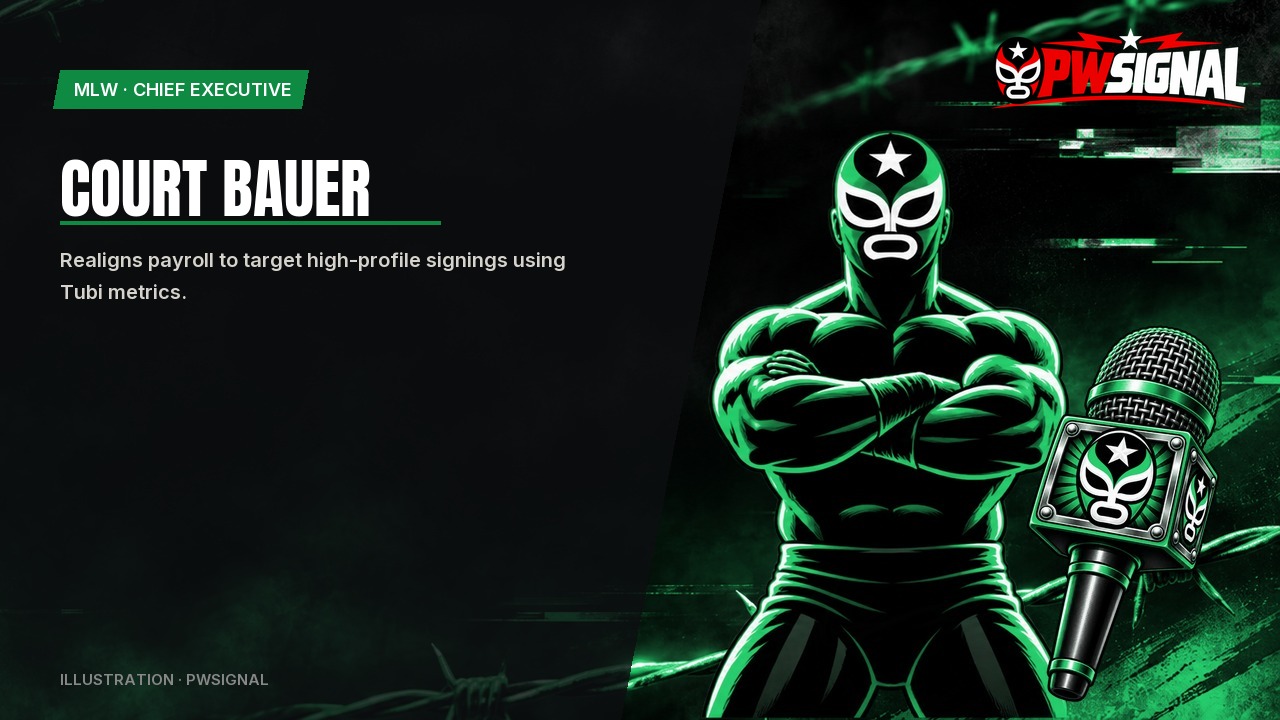
NEW ROCHELLE, N.Y. (Nov. 14, 2026) — Major League Wrestling is fundamentally restructuring how it manages talent contracts and corporate capital. According to an investigative report by Fightful, CEO Court Bauer and MLW executives are actively utilizing viewer retention and conversion analytics from their distribution agreement with Fox-owned streaming platform Tubi to reshape the promotion's payroll. Rather than maintaining broad exclusive deals for mid-level performers, MLW is allowing multiple contracts to expire to free up budget space for high-profile free agents, sparking sharp public criticism from Game Changer Wrestling owner Brett Lauderdale, as documented by 411MANIA.
CORE METRIC
Tubi AVOD Streaming Viewership Analytics
PAYROLL STRATEGY
Let Mid-Tier Expire · Target Marquee Signings
MARKET OPPOSITION
GCW Criticizes Restrictive Exclusivity Terms
Brett Lauderdale Blasts Restrictive Clauses Amid Independent Turf Tension
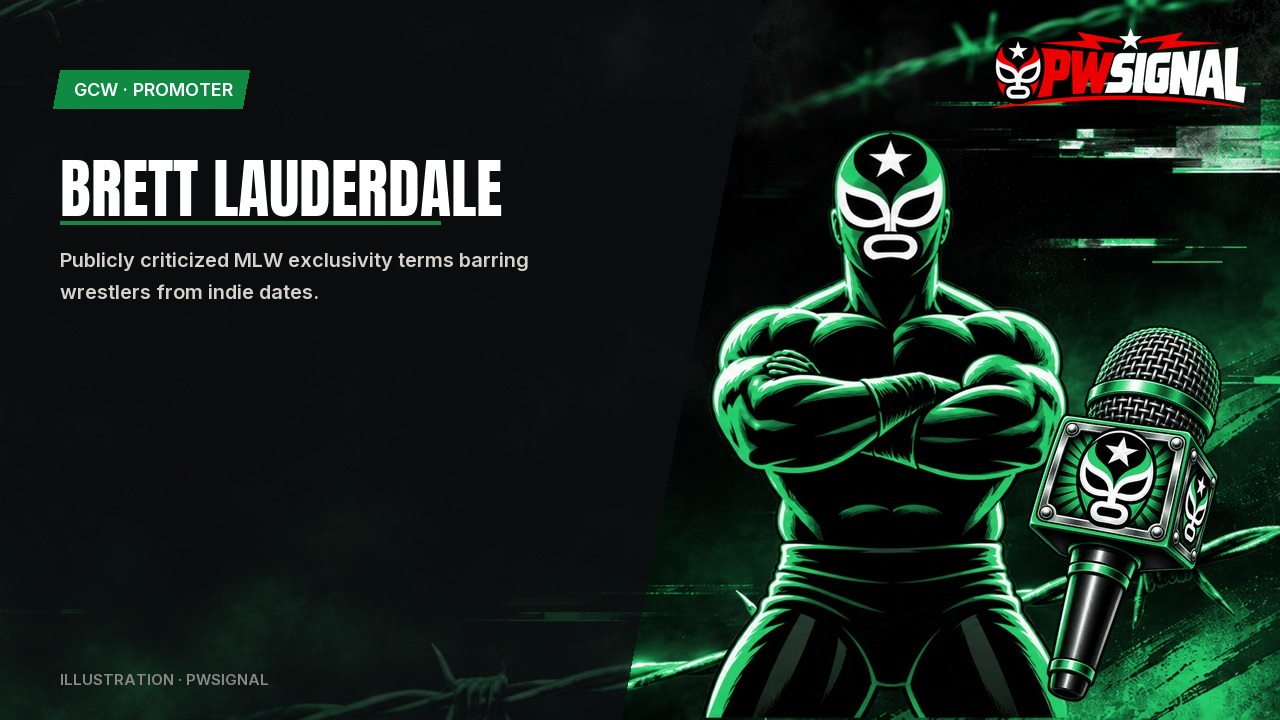
The strategic shift has triggered friction across the independent wrestling landscape. Game Changer Wrestling promoter Brett Lauderdale publicly condemned MLW's contract structure, writing on social media that there is "zero reason" for rising wrestlers to sign exclusive agreements with MLW under its current taping schedule.
Lauderdale pointed specifically to contractual exclusivity covenants that prohibit contracted MLW talent from appearing on GCW events. He argued that with MLW staging television tapings roughly once a month, exclusivity agreements stall an independent wrestler's momentum while preventing them from earning reliable weekend paydays on the broader independent circuit.
As analyzed by WrestleZone, the ideological dispute reflects diverging business models. While GCW operates as a high-volume live touring company dependent on ticket sales and TrillerTV streaming subscriptions, MLW functions as a television production studio focused on advertising splits and international licensing. By narrowing its roster to genuine needle-movers, MLW is banking that lean, top-heavy rosters represent the future of profitable mid-major wrestling promotions.